Pan-Seared Chicken with Sautéed Vegetables — A 7-Day Rotation
A simple pan-seared chicken breast with a rotating sautéed vegetable side. Seven days, seven vegetables — high protein, nutrient-dense, low carb. One pan, minimal prep.
Overview
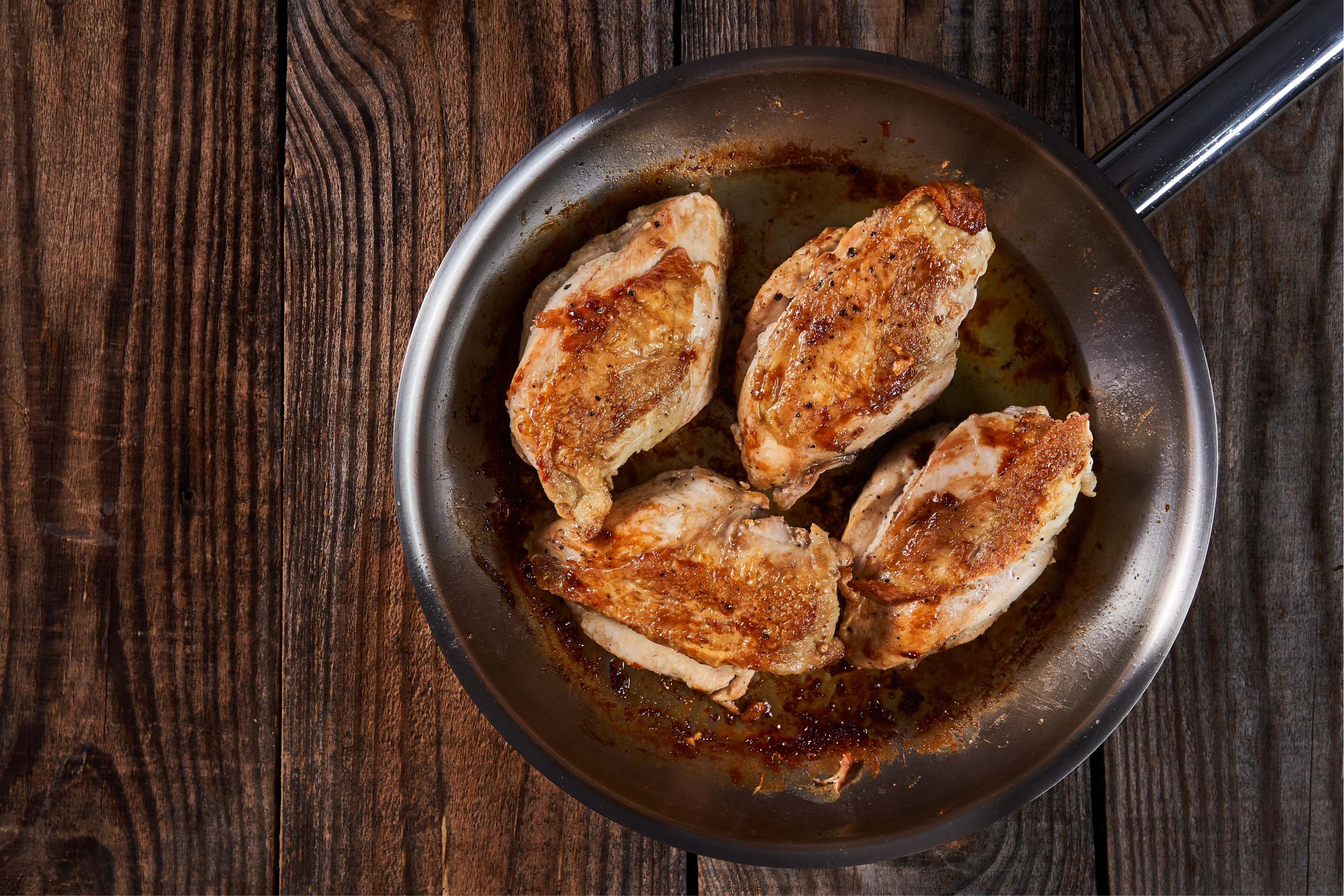
One chicken breast, seared in a stainless steel pan, with a vegetable side sautéed in the same pan straight after. That’s the meal.
This is one of three meals I eat daily — the low-carb option focused on protein and nutrients from vegetables. No rice, no potatoes, just chicken and a single vegetable side.
The vegetable rotates across seven days. Each one brings different nutrients, so across the week you cover what matters for training and recovery without eating the same thing repeatedly.
Good for
Anyone wanting a quick, high-protein meal. Works well post-workout since chicken breast is leucine-rich, which supports muscle recovery.
Equipment
| Component | Specification |
|---|---|
| Hob | Ceramic, 6-level dial |
| Pan | Stainless steel |
| Oil | Refined avocado oil (high smoke point) |
Base Ingredients (Every Day)
| Ingredient | Amount | Notes |
|---|---|---|
| Chicken breast | 1 medium (~180–200g raw) | Salt and pepper only |
| Refined avocado oil | 1 tbsp | For searing |
| Butter | ~10g | Added in final 30 seconds |
| Lemon | ½ squeeze | At the end |
| Extra virgin olive oil | ½–1 tsp (optional) | Finishing drizzle, off heat |
The vegetable changes daily — see the rotation below.
Cooking Method
This method stays the same every day. Only the vegetable changes.
Step 1: Prep
- Butterfly the chicken: Lay the breast flat and slice horizontally through the middle to create two thinner pieces. This helps it cook faster and more evenly.
- Pat chicken dry
- Wash vegetables, then dry them well — wet vegetables steam instead of sauté
- Have everything ready before heating the pan
Step 2: Preheat the Pan
- Dial to 5
- Heat for 2–3 minutes
- Test with the Leidenfrost test: flick a drop of water onto the pan — it should ball up, dance across the surface, and evaporate. If it just sizzles and disappears instantly, the pan is too hot. If it sits and boils, not hot enough.
Step 3: Add Oil
- Add 1 tbsp refined avocado oil
- Swirl to coat
- If you see noticeable smoke, drop to 4 immediately
Why refined avocado oil
High smoke point (~250–270°C), neutral flavour, stable at searing temperatures. Extra virgin olive oil smokes too early for this.
Step 4: Sear the Chicken
- Lay chicken in at 4
- Do not move it for 4 minutes
- Flip when it releases easily
- Second side: 3–4 minutes
- Final 30 seconds: add ~10g butter (Kerrygold or similar) to the pan. Tilt the pan slightly and spoon the melted butter over the chicken repeatedly. This is called basting — it adds flavour and helps the chicken finish evenly.
- Remove to a plate and rest 3–5 minutes
Step 5: Sauté the Vegetable
- Check the pan — if it looks dry, add ½ tbsp oil before the vegetables go in
- The fond (browned bits from the chicken) adds flavour to the vegetables
- Keep heat at 3–4 for firmer vegetables (broccoli, mushrooms, asparagus)
- Drop to 3 for leafy vegetables (spinach, kale)
- Cooking times vary by vegetable — see the rotation below
Step 6: Finish
- Turn heat off
- Squeeze lemon over vegetables
- Optional: drizzle ½–1 tsp extra virgin olive oil
- Slice chicken against the grain
- Serve together
Dial Reference
| Phase | Dial | Duration |
|---|---|---|
| Preheat pan | 5 | 2–3 min |
| Sear chicken | 4 | 4 min + 3–4 min |
| Butter baste | 4 | Final 30 sec |
| Sauté firmer vegetables | 3–4 | 3–5 min |
| Sauté leafy vegetables | 3 | 1–2 min |
| Finish | Off | — |
The 7-Day Rotation
Each day uses a single vegetable. The rotation covers a range of nutrients relevant for training — iron, magnesium, vitamin C, B vitamins, potassium, and anti-inflammatory compounds.
After removing the chicken, check the pan. If it looks dry, add ½ tbsp oil. The fond left behind adds flavour to whatever vegetable you’re cooking.
Day 1 — Spinach
| Vegetable | Amount | Cooking |
|---|---|---|
| Spinach | 70g | 45–60 sec at dial 3 |
Key nutrients: Iron, folate, magnesium, potassium.
Nutritional function: Folate supports cell repair. Magnesium aids muscle relaxation and recovery. Iron is essential for oxygen transport — the lemon at the end improves absorption.
Nutrition (full meal)
| Macro | Value |
|---|---|
| Protein | ~46g |
| Carbohydrates | ~4g |
| Fat | ~24g |
| Calories | ~410 kcal |
Day 2 — Kale
| Vegetable | Amount | Cooking |
|---|---|---|
| Kale (stems removed) | 70g | 2–3 min at dial 3 |
Key nutrients: Vitamin K, vitamin C, calcium, fibre.
Nutritional function: Vitamin K supports bone health and blood clotting. Calcium without dairy. The fibre is higher than spinach, so remove the stems to reduce gut irritation.
Nutrition (full meal)
| Macro | Value |
|---|---|
| Protein | ~46g |
| Carbohydrates | ~6g |
| Fat | ~24g |
| Calories | ~415 kcal |
Day 3 — Mushrooms
| Vegetable | Amount | Cooking |
|---|---|---|
| Mushrooms (sliced) | 100g | 3–4 min at dial 4 |
Key nutrients: Selenium, B vitamins (especially B2, B3, B5), vitamin D (if sun-exposed).
Nutritional function: Selenium supports thyroid function and acts as an antioxidant. B vitamins are essential for energy metabolism. Very easy on digestion — a good option after hard training.
Nutrition (full meal)
| Macro | Value |
|---|---|
| Protein | ~47g |
| Carbohydrates | ~4g |
| Fat | ~24g |
| Calories | ~410 kcal |
Day 4 — Broccoli
| Vegetable | Amount | Cooking |
|---|---|---|
| Broccoli (florets) | 80g | 4–5 min at dial 3–4 |
Key nutrients: Sulforaphane, vitamin C, vitamin K, calcium, fibre.
Nutritional function: Sulforaphane is a powerful anti-inflammatory compound that supports recovery. Better calcium-to-oxalate ratio than spinach, so absorption is higher. Arguably the most nutrient-dense vegetable for training.
Nutrition (full meal)
| Macro | Value |
|---|---|
| Protein | ~47g |
| Carbohydrates | ~6g |
| Fat | ~24g |
| Calories | ~420 kcal |
Day 5 — Red Pepper
| Vegetable | Amount | Cooking |
|---|---|---|
| Red pepper (sliced) | 80g | 2–3 min at dial 4 |
Key nutrients: Vitamin C (highest of any common vegetable), vitamin A, antioxidants.
Nutritional function: Vitamin C supports collagen synthesis, immune function, and iron absorption. One red pepper contains more vitamin C than an orange.
Nutrition (full meal)
| Macro | Value |
|---|---|
| Protein | ~45g |
| Carbohydrates | ~7g |
| Fat | ~24g |
| Calories | ~415 kcal |
Day 6 — Courgette
| Vegetable | Amount | Cooking |
|---|---|---|
| Courgette (sliced) | 100g | 2–3 min at dial 4 |
Key nutrients: Potassium, manganese, vitamin C.
Nutritional function: Mostly water, so it supports hydration. Very low fibre — the easiest vegetable on digestion. Use this when your stomach feels off or you need a lighter meal.
Nutrition (full meal)
| Macro | Value |
|---|---|
| Protein | ~45g |
| Carbohydrates | ~4g |
| Fat | ~24g |
| Calories | ~400 kcal |
Day 7 — Asparagus
| Vegetable | Amount | Cooking |
|---|---|---|
| Asparagus (trimmed) | 80g | 3–4 min at dial 4 |
Key nutrients: Folate, vitamin K, prebiotic fibre, glutathione.
Nutritional function: Folate supports cell division and repair. Prebiotic fibre feeds beneficial gut bacteria. Glutathione is an antioxidant that supports liver function and recovery.
Nutrition (full meal)
| Macro | Value |
|---|---|
| Protein | ~46g |
| Carbohydrates | ~4g |
| Fat | ~24g |
| Calories | ~410 kcal |
Quick Reference
| Day | Vegetable | Key Benefit |
|---|---|---|
| 1 | Spinach | Iron, magnesium, folate |
| 2 | Kale | Vitamin K, calcium |
| 3 | Mushrooms | Selenium, B vitamins |
| 4 | Broccoli | Sulforaphane, anti-inflammatory |
| 5 | Red pepper | Vitamin C (highest) |
| 6 | Courgette | Hydration, lowest gut stress |
| 7 | Asparagus | Folate, prebiotic fibre |
Notes
Butterflying: Slicing the chicken breast horizontally through the middle to create two thinner pieces. Thinner pieces cook faster, more evenly, and are easier to baste. Do this before patting dry.
Leidenfrost test: The water droplet test to check pan temperature. When the pan is hot enough, water balls up and dances rather than boiling or evaporating instantly.
Butter basting: Adding butter in the final 30 seconds and spooning it over the chicken. Adds flavour, richness, and helps the chicken finish cooking evenly. Around 10g is enough — more makes the meal heavier than necessary.
Fond: The browned bits left in the pan after searing. Don’t wash them out — they add flavour to the vegetables.
Oil choice: Refined avocado oil for searing (high heat). Extra virgin olive oil for finishing (off heat only — it loses beneficial compounds when overheated).
Lemon: Improves non-heme iron absorption from spinach and kale. Squeeze it on at the end.
Kale stems: Remove them every time. They’re tough and can irritate digestion.
Drying vegetables: Wet vegetables steam instead of sauté. Wash them, then dry with a salad spinner or kitchen towel.
If chicken sticks: The pan wasn’t hot enough. Wait until it releases naturally before flipping.
Summary
| Component | Specification |
|---|---|
| Protein source | 1 chicken breast (~45–47g protein) |
| Vegetable side | 70–100g, rotated daily |
| Cooking fat | 1 tbsp refined avocado oil + 10g butter |
| Finish | Lemon + optional EVOO |
| Calories | 400–420 kcal per meal |
| Carbohydrates | 4–7g depending on day |
Seven days, seven vegetables. High protein, low carb, nutrient-dense.
Documented January 2026.