How I Got Into Photography
What started as buying a camera for AWS demo videos turned into teaching myself photography, Lightroom, and building a full gallery pipeline from scratch. Six months in, this is how it unfolded.
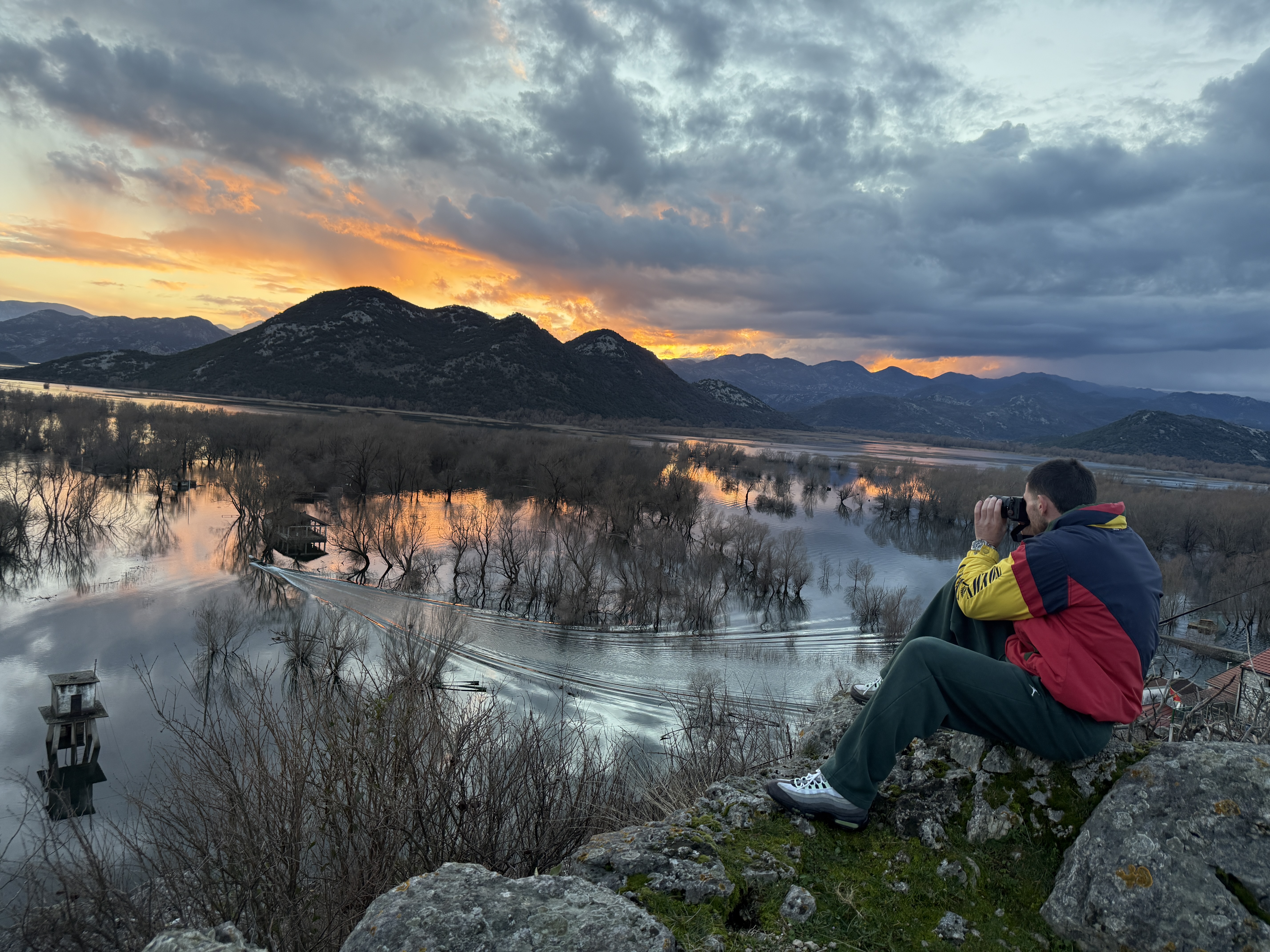
How I Learn
When I pick up something new, I get hyperfocused and just go with it. I do not plan the path. I do not sit down and map things out before starting. I pick the thing up, get absorbed, and let the process itself reveal what it becomes. When I bought the camera I did not even know if this was going to be an interest, a skill, or nothing at all.
The camera was bought for AWS videos. Within a month I was chasing sunrises in Bodrum. Three months later I was in the mountains of Montenegro shooting 1,668 photos in a week, then realising I had taken too many and had to learn to cull. From there I taught myself to edit in Lightroom Classic, built a personal preset, learned masking and HSL colour work, and had hundreds of edited images from two countries. Then I had nowhere to put them. People said TikTok, Instagram. But I do not have social media and I am not a fan of it. So I thought about how I could show this work online. I really like my Jekyll Chirpy site, the dark theme, the sidebar, the way posts are structured. So naturally I thought about how I could integrate a gallery into that and turn what was a documentation site into a hybrid with photography. I built the whole system myself. S3 for storage, CloudFront for delivery, custom layouts, Fancybox lightbox, inline post galleries. I did not plan any of that when I walked into CEX.
Cloud engineering followed the same cycle. I picked up AWS through the re/Start programme because honestly it sounded like a cool profession. Got hyperfocused, got certified, built projects, documented everything. It was very difficult to get a job so I had to work extremely hard. That resilience stuck with me. Perhaps learning cloud is why I am like this. It taught me that if I keep going and keep building, something eventually happens. Photography is following the exact same trajectory.
The common thread is not photography or cloud or any specific skill. It is the way I engage with things. I go deep. I build systems around what I learn. I document obsessively, not for an audience, but because the documentation is part of how I process and internalise things. And I am comfortable not knowing where something is going. I did not need to know photography would become this before buying the camera. I trusted the process because that is how every other thing in my life has worked out.
I only really discovered this about myself from writing about it. Documenting the journey, then stepping back and realising the cycle looked familiar. If I did not write, I would never have seen it.
The Camera
I bought a Sony A6700 from CEX on 30 September 2025. I did not buy it for photography.
I am an AWS content creator. I have been making training content since December 2024, publishing lessons and demos. The videos are screen recordings of AWS console walkthroughs, and they work, but they are just a screen with no face and no presence. I wanted to add a human touch. I think putting my face in the corner of demos would make the content feel more genuine. In this AI age, where generated content is everywhere and getting harder to distinguish from real work, I think that matters more than ever.
I did a lot of research and started looking at the well-priced Sony ZV-E10 II, a vlog camera, 26MP, and good for talking-head footage. However, it has no in-body image stabilisation. I was not planning to vlog, but I did not want to buy a camera and then one day need IBIS and not have it. I remember reading a post on Reddit where someone was complaining about the ZV-E10 II not having IBIS and said it was not worth it. That stuck with me. Now, the more I use the camera, the more I realise how right that was. Handheld gym filming, jiu-jitsu mat-side, walking shots, anything off a tripod. That foresight paid off.
The next step up was the A6700, and based on my research I thought it was worth spending a couple hundred extra for a better all-round camera. CEX had one in excellent used condition with the Sony 18-135mm f/3.5-5.6 kit lens for £1,250, and they give a 5-year warranty on everything. Maybe it was impulsive. Maybe I had a spending problem. But I bought it. Funny enough, I never got round to making those AWS videos. Instead I dived straight into photography and videography.
Bodrum — November 2025
The following month I went to Bodrum for two weeks. I packed the camera, the tripod, and the kit lens. First time travelling with camera gear. First time shooting anything beyond test clips in my flat.
Bodrum is somewhere I go when I want to get away from London. Sun, sea, good food. But this time I had a reason to get up early. I already like mornings for their peacefulness, but now there was purpose. I drove around at sunrise, hit all the places I know in Bodrum, and shot with intent. Golden hour, sunset, the coast. I went to locations I had been to many times before, but this time I was looking at them differently. Framing things. Noticing light.
One night I set up the tripod on an overpass above a dual carriageway and took long exposure shots of cars passing underneath. The headlights and tail lights created motion trails across the frame. A Turkish man walked past and said “kolay gelsin,” which means something like “may your work be easy.” He thought I was working. I found that funny.
It was a lot to take in. I was constantly adjusting settings, learning about ISO, shutter speed, aperture, histograms, all at once. I was shooting in aperture priority because te Bodrum sun kept changing and I did not know how to handle it manually. I was talking to AI constantly, asking what settings to use, what things meant, how to fix problems. The complexity was difficult at times and a bit overwhelming.
But I liked the control. Unlike an iPhone, which applies heavy post-processing and makes decisions for you, the A6700 gives you everything raw. You choose the exposure. You choose the white balance. You choose what to focus on and how much light to let in. That felt right to me. I have the power to take a shot how I want it, not how a phone thinks I want it.
There was not one single moment where I thought “I enjoy this.” It was more gradual. Taking photos gave me something purposeful to do, especially as a solo traveller. And then later, after editing the shots in Lightroom, looking back at them and showing friends, appreciating not just the picture but the moment it captured. I already love documenting things and writing things down. Photography is the same instinct in a different form. The photo is a record of a moment I was present for, and I made it look the way I wanted it to look. That is when it clicked.
Gym Filming — December 2025 to January 2026
I came back from Bodrum and started filming at the gym. Training is a big part of my life. Around that time I was starting a 12 week creatine study, tracking the effects of supplementation on strength and recovery under real world conditions. I wanted to record my lifts to track progress, so I set up the tripod and started filming.
Different challenge entirely to Bodrum. The gym is low light, overhead fluorescents, no natural light. Everything I learned in bright sunshine did not apply. ISO climbed above 1000. The kit lens maxed out at f/4.0 at my working focal length. Aperture priority mode caused exposure fluctuations as I moved through the frame. I had to learn full manual exposure, lock ISO, set white balance to 3000K for the industrial look I wanted, and break the 180-degree shutter rule by shooting at 1/25 instead of 1/50 to claw back a stop of light.
That process became a full technical reference document. I wrote Low Light Gym Filming to capture everything I learned. Camera settings, exposure configuration, focal length selection, common issues, and the lens upgrade path I was already thinking about.
But something shifted. I did not enjoy filming myself training. So I started filming my friend who I train with instead, creating videos for him. That evolved into a full After Effects workflow for vertical 4K gym videos. Marker-driven rep counters, cinematic motion, export settings that survive platform compression. I then offered to film some PTs in my gym who needed content. I started really enjoying the recording process.
That is when I realised something. Everyone in gyms films with a tripod, locked off, static shot. Nobody goes handheld. And since I do not want to be in the shot myself, I can be the one behind the camera, moving with the subject, getting angles nobody else bothers to get. That is where I am now with gym filming.
It even carried into Montenegro. In a small gym in Cetinje, I set up the camera to film the space. 18mm, f/3.5, ISO 640, 1/25 shutter. Wide shot from above capturing the whole gym. What started as just filming the space turned into a session with the owner, Saša, a 63-year-old bodybuilder. I asked if I could record him while he was training someone. He was happy. I ended up joining in. He taught me some good things and I got a proper workout with him, all on camera. One of the highlights of the trip.
The kit lens limits low light performance. That is a fact. The Sigma 18-50mm f/2.8 has been in my basket more than once. But I have this thing where I want to learn the fundamentals first. The 18-135mm forces me to understand exposure, to work around the limitations, to actually learn why f/3.5 is not enough rather than just throwing money at the problem. Every constraint has taught me something. When I do upgrade, it will be because I have outgrown the kit lens, not because I got impatient.
Jiu-Jitsu — January 2026
A friend trains jiu-jitsu and I thought it would be cool to get some shots. By this point I had filmed in bright Bodrum sun, low light gyms, snow, fog, and rain. A jiu-jitsu gym was another scenario to add to the list. I like putting myself in new situations. The more shooting conditions I expose myself to, the more I learn. Every environment has different lighting, different movement, different problems to solve. For now I want to experience as much as possible. Perhaps in the future I will focus on a niche, but right now the variety is the education.
Different challenge again. Two bodies grappling, unpredictable movement, warm overhead lighting, wood floors bouncing colour back up. I did a lot of preparation beforehand, researching settings, thinking about focal length, shutter speed for fast action, whether to bring the tripod or not. In the end I left it at home. Handheld, wide area tracking set to Human, 1/250 shutter for photos, 25fps at 1/50 for video. White balance at 3000K. The A6700’s IBIS and subject recognition handled it well. Another moment where that foresight on the camera choice paid off.
The shots were decent. The teacher liked them enough to post on his socials. But by my own standards I was not completely happy. The lighting was not great and it showed. What I did enjoy was capturing action shots at high shutter speeds. A person mid-fall, mid-throw, frozen in the air. That was satisfying. It was the same feeling as the long exposure motion trails in Bodrum, just the opposite end of the shutter speed. Freezing a moment instead of stretching one.
I will go back. Now I know the space and the lighting, I can prepare better.
Montenegro — January 2026
A dream about a primary school friend led to a £15 Ryanair flight and a week in Montenegro with the A6700 and the 18-135mm. I shot 1,668 photos across seven days.
Every condition was different. Rain in Kotor pushed ISO to 2000-3000. Snow in Lovćen National Park required ISO 50 and careful highlight management. Fog at Ostrog Monastery needed manual exposure adjustment for every frame. Bright white stones in a forest blew out the highlights at ISO 100, f/3.5, 1/50. That was when I knew I needed an ND filter. Same problem I had in Bodrum.
I experimented with long exposure for silky water at Rijeka Crnojevića. ISO 50, f/11, 0.4 to 0.5 seconds on the tripod. I shot sunrise over the Bojana River from a cabin deck. I tried slow motion at 50fps for wood chopping footage and learned that the sweet spot on the 18-135mm is around 70 to 85mm for sharpness and compression.
Bodrum taught me the basics. Montenegro tested whether I had actually learned them. Every day was a different environment with different problems, and I had to adapt on the spot. That week did more for my understanding of the camera than any amount of research could have.
The full trip is documented in Montenegro — January 2026.
Learning the Edit — February 2026
Coming back from Montenegro with 1,668 RAW files forced me to learn Lightroom Classic. I had never edited a photo before.
I started by learning to cull. AI-assisted culling flagged 429 rejects on the first pass. Many were false positives on landscapes because the AI expects a defined subject and scenic depth does not give it one. I reviewed every reject manually, trimmed bursts, rated the keepers, and brought the total down to 467 across multiple deliberate passes. That process is documented in Culling 1,668 Photos from Montenegro.
Then I learned to edit. Profile selection, white balance, tonal adjustments, HSL colour work, masking, noise reduction. I built a test group of five images representing different conditions, edited the first one from scratch, saved it as a preset, and tested it across the others. The preset brought the total from 467 down to 341 as a final quality filter. Some images that survived culling did not survive editing. That process is documented in Editing 341 Photos from Montenegro.
Building the Gallery — February 2026
After editing, I had a collection of images with nowhere to put them. I do not have social media and I am not a fan of it. The photos sat on my drive.
Then I realised I could build something myself. My blog runs on Jekyll with the Chirpy theme. I already know AWS. So I built a full photo gallery system. S3 bucket for storage, CloudFront distribution for delivery, custom layouts and Fancybox lightbox integrated into the Chirpy theme, inline post galleries, album pages, the whole pipeline.
The photos serve through photos.digitalden.cloud. The gallery lives at notes.digitalden.cloud/gallery/. When someone asks if I have social media, I give them my website instead. Full-resolution images, no compression, no algorithm, no account needed. I control the data and the presentation. As a cloud engineer, that matters to me.
The full build is documented in Adding a Photo Gallery to Jekyll Chirpy.
The Pipeline
This is what I enjoy most. Not just the shooting or the editing, but the whole pipeline.
Taking a photo on the A6700, importing RAW files into Lightroom, culling, editing, exporting, uploading to S3, serving through CloudFront, displaying on a Jekyll site I built myself. Every step uses a different skill. Camera technique, post-processing, cloud infrastructure, web development. The fact that I can use my cloud engineering background to build the systems around my photography is what makes this feel natural. It is the same approach I took when I was learning AWS from scratch. Build the portfolio, build the skills, document everything, and keep going until something happens.
I started because I wanted to put my face on a screen recording. Five months later I have a camera kit, a photo gallery, a gym filming workflow, technical reference documents, a Lightroom catalog, and hundreds of edited images from Turkey and Montenegro.
What Comes Next
I am in Bodrum now, writing this on 3 March. This time I have an ND filter, clean glass, and six months of experience I did not have the first time. I know the locations. I know the light. But this trip is not just about better photos. I have started teaching myself video.
Not a vlog. Not a tutorial. A compilation of Bodrum, 60 to 90 seconds of clips cut together with music. Places I go, shot well enough to feel intentional. I am learning scene by scene, documenting every setting, every mistake, every realisation as it happens. The market taught me to let the scene create the action and hold still. The beach taught me that light direction matters more than any camera setting. The ND filter taught me to check colour before exposure.
It is the same pattern again. Pick the thing up. Get absorbed. Let the process reveal what it becomes.
I still want to film a friend playing football. Fast movement, outdoor light, tracking a subject across a pitch. Every new situation forces me to learn something I did not know before. Bodrum taught me exposure. The gym taught me manual settings. Jiu-jitsu taught me action photography. Montenegro taught me to adapt to conditions. Video is teaching me composition, movement, and when to hold still. Football will teach me something else.
Beyond personal work, I want to build this into a portfolio. The same way I built my AWS career from scratch, documenting everything, learning in public, building skills until the work speaks for itself. I do not know exactly where photography and videography go from here. Maybe portfolio work. Maybe paid shoots. Maybe content for others. For now I am enjoying the process, and the process is teaching me everything I need.
Documented March 2026.